Choosing the Right Durable Medical Equipment
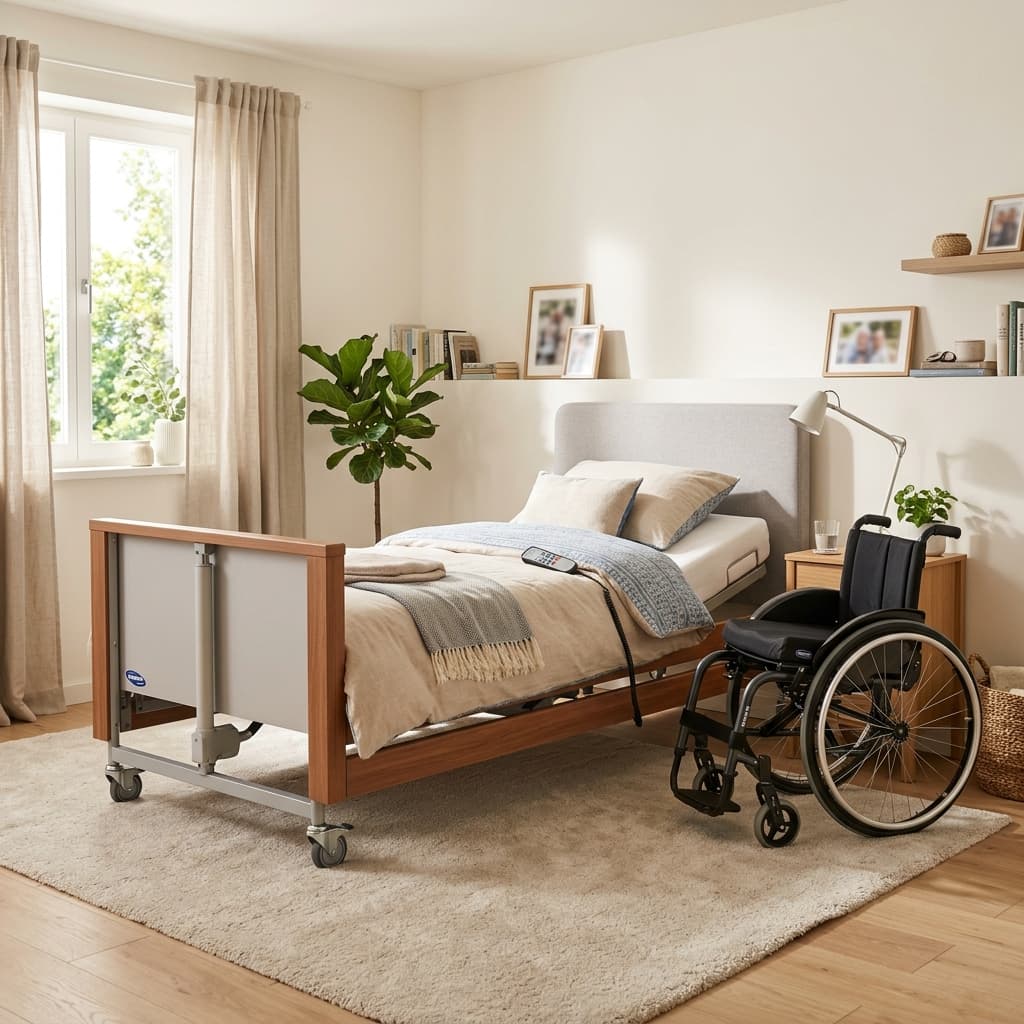
From hospital beds to wheelchairs — match equipment to real daily needs.
Durable Medical Equipment (DME) can transform daily life — or gather dust in a corner. The difference is almost always in the matching.
Start with the task, not the catalogue
Rather than "we need a wheelchair," ask: where does the day break down? Getting to the bathroom at night? Fatigue at the grocery store? Different answers point to different equipment.
Hospital beds
Worth considering when transfers are difficult, when someone spends most of the day in bed, or when pressure injuries are a risk. Semi-electric covers most needs; full-electric helps when the caregiver has limited strength.
Wheelchairs and mobility
Manual chairs suit users with upper body strength and an assisting caregiver. Power chairs restore independence for longer distances. A rollator is often the better first step — it keeps someone walking.
Lift chairs and transfer aids
A power lift recliner can eliminate the single riskiest movement of the day. Transfer boards and gait belts protect both the client and the caregiver.
Coverage
Medicare, Medicaid and DDD funding each cover different items with different documentation requirements. A physician's order stating medical necessity is nearly always the starting point.
Helena delivers, sets up and services DME across New Jersey — and we'll tell you honestly when you don't need something.